Need concrete patios services in Lake St. Louis?
Request an estimate for a new driveway or patio. A local provider in our network will follow up. No obligation.
No obligationRequest a patio estimate
Ptobin Concrete is a referral desk for new concrete patios in Lake St. Louis and the Lake St. Louis area. Tell us the size, finish and timing you have in mind. The request goes to an independent local provider who pours and finishes the slab. Ptobin Concrete does not do the work itself.
Less searching, more pouring. Pour seasons are short where winters bring deep frost, so early requests help. Use this page to learn about sizing, finishes, drainage and typical costs first. Then request an estimate with no obligation. Prices vary by job, so ask for quotes in writing and compare them side by side before you decide.
Good pouring weather is short in a cold-winter climate. Providers fill their calendars early. If you want a patio this year, start the search now.
Ptobin Concrete is a referral service. It connects you with an independent local provider in the Lake St. Louis area. The provider does the work. Ptobin Concrete does not.
Concrete cures well in mild temperatures. Deep winter frost, spring flooding and hot humid summers leave a narrow window. Thunderstorms add risk, since hard rain on a fresh slab can pit the surface.
Asking early gives you more choice of dates. It also gives you time to compare options before anyone breaks ground.
Concrete is firm, flat and long lasting. It holds furniture, grills and even hot tubs better than loose materials. It takes color and pattern, so it does not have to look plain. Hail and heavy rain do not harm it the way they can harm a wood deck.
Most jobs follow the same order. Know it and quotes are easier to compare.
Start with how you will use the space. A table for four needs roughly 10 by 10 feet. Add room for chairs to slide back. A grill spot and walking paths add more.
Many homeowners wish they had gone bigger. Adding later leaves a visible seam. Mark the outline with a hose or spray paint and live with it for a weekend.
Residential patios are commonly about 4 inches thick. Areas that hold a hot tub or heavy planters may need more. Where the ground sees deep frost, the gravel base matters as much as the slab. It lets water drain away instead of pushing the concrete upward.
Finish changes the look, the grip and the price. These are the usual choices for concrete flatwork.
Light ridges add grip when wet. It is the plain, practical standard.
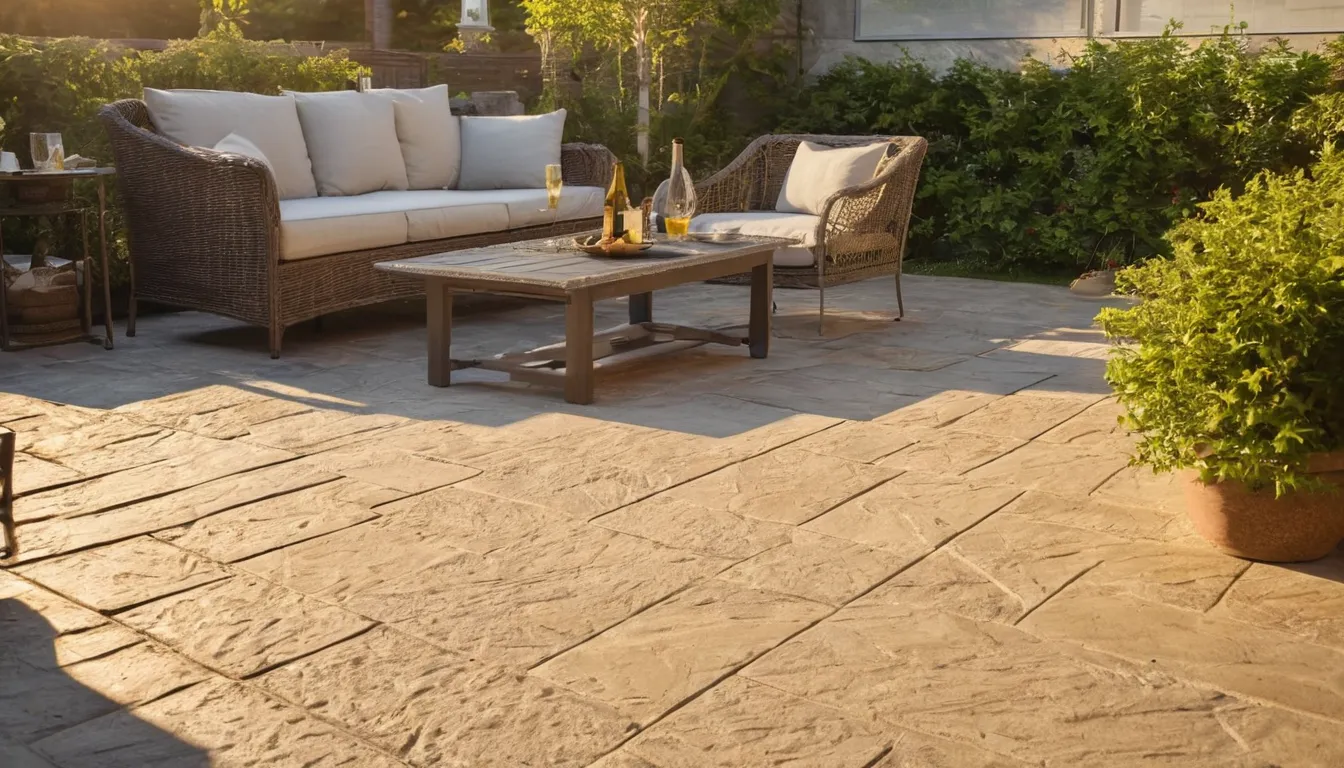
Stamped concrete patios use mats to press patterns such as stone, slate or brick into the surface. Color is added in the mix or on top. Expect a higher price and regular resealing.
Washing away the top layer shows the small stones underneath. Integral color gives an even tone through the slab.
Slope matters. A patio beside the house should fall away from the walls, commonly about a quarter inch per foot. Water pooling at the wall can find its way into a basement. In a home with a full basement and sump pump, that adds work for the pump.
Older frame houses and bungalows may have settled over the decades. Ask the provider to check the existing grade before the pour. If you already see wall cracks or damp spots, have foundation repair experts look at the house first. Pouring over a problem only hides it.
Plan where downspouts and sump discharge pipes run. A new slab should not block them. Providers can often route pipes under or around it. Raise this at the first conversation.
Want to talk through your layout? Request a callback to check provider availability in your area.
Get at least two written quotes. Each should list size, thickness, base, finish and cleanup. Ask who handles permits if your area requires one. Confirm licensing and insurance directly with the provider, since rules differ by state.
Keep foot traffic off for the first few days and vehicles off longer. Seal the surface as the provider advises, often in the first year and every few years after. Rinse spills and sweep often.
In the first winter, skip deicing salts. They can scale a young surface. Use sand for traction and keep downspouts clear.
Estimate first, then decide. Send the basics and an independent local provider can follow up with details and a written quote. There is no obligation.
The provider marks the outline, clears sod and digs to the depth your soil and climate require.
A compacted gravel base, framed edges and steel mesh or rebar prepare the slab for years of use.
Concrete is placed, leveled and finished, with joints cut to control cracking.
The slab rests before heavy use, then a sealer may protect the surface.
These are typical U.S. ranges. Your price depends on size, soil, access, finish and local rates. Treat them as a starting point and ask each provider for a written quote.
| Item | Typical range | Notes |
|---|---|---|
| Plain broom-finish slab | $6 – $12 per sq ft | Most common and simplest option |
| Stamped and colored concrete | $12 – $25 per sq ft | Pattern and color raise labor and materials |
| Exposed aggregate finish | $8 – $18 per sq ft | Stones show once the surface is washed |
| Excavation and gravel base | $1 – $4 per sq ft | Rises with deep digging or poor soil |
| Old slab removal | $2 – $6 per sq ft | Depends on thickness and hauling |
| Sealer | $1 – $3 per sq ft | May be reapplied every few years |
Tell us the rough size, finish idea and timing you want for your new patio.
Your request goes to an independent provider serving your part of the area.
The provider outlines scope, finish, timing and price. Compare it with other quotes.
Pick the provider you like and agree on a pour date that fits.
Send one request instead of sorting through listings. It is passed along to a local provider.
Providers in our network run their own businesses and set their own schedules and prices.
Learn about finishes, drainage and typical price ranges before you talk with anyone about the work.
Requesting an estimate commits you to nothing. Compare quotes and decide at your own pace.
Request an estimate for a new driveway or patio. A local provider in our network will follow up. No obligation.
No obligationTypical U.S. prices run from about $6 to $25 per square foot, depending on finish, base work and access. A plain patio costs less than a stamped one. Get a written quote before you commit.
Light foot traffic is often fine after a few days. Heavy furniture, grills and vehicles usually need longer. Full strength takes weeks, so follow the specific guidance your provider gives you.
Providers can sometimes pour in cool weather using special mixes and covers, but hard frost is a real risk. Many wait for milder temperatures. Ask the provider how they handle weather on pour day.
Request an estimate for a new driveway or patio. A local provider in our network will follow up. No obligation.
No obligation